
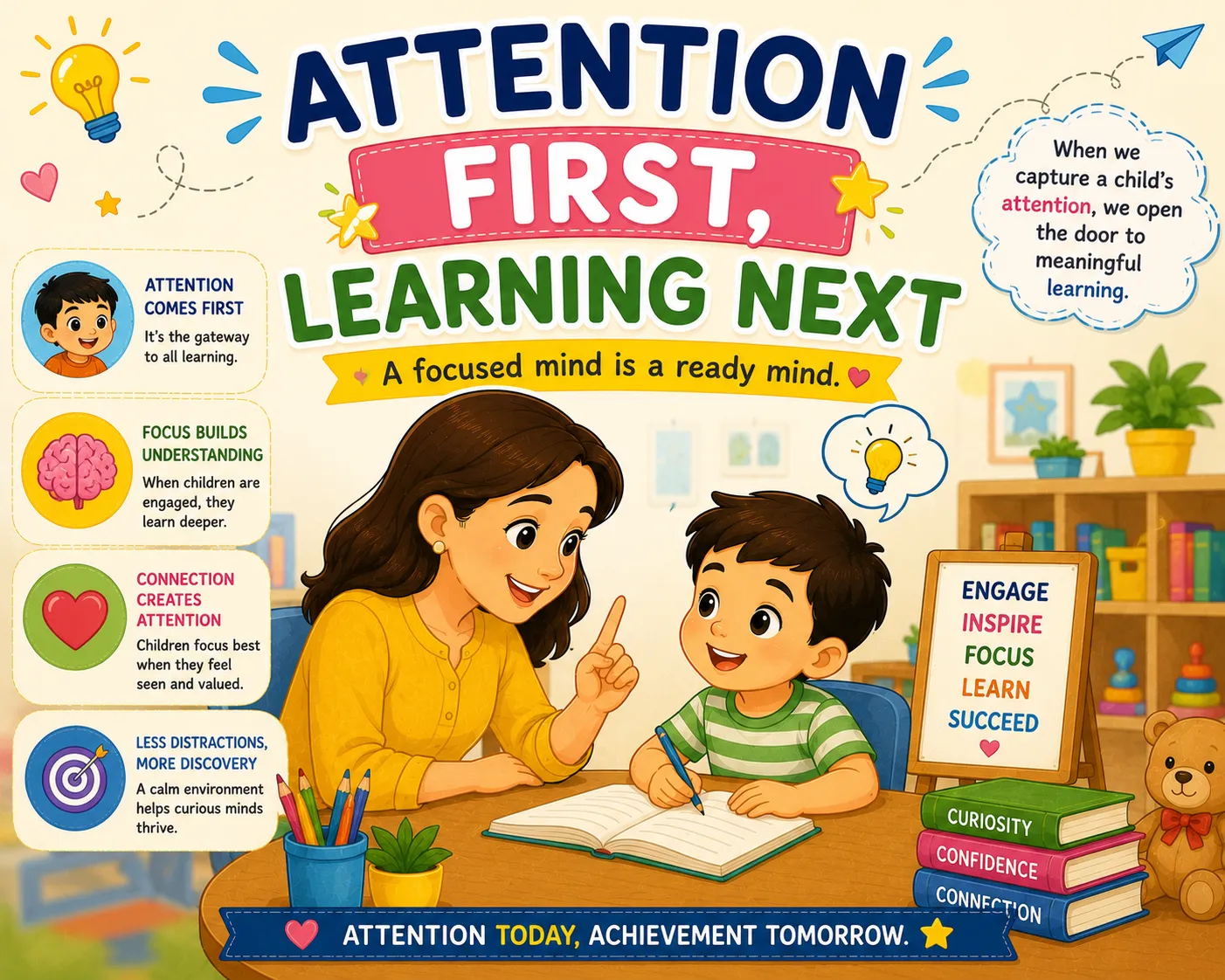
One of the biggest mistakes we make as adults is expecting children to learn the way we want to teach. The truth is, learning happens best when we teach the way children are ready to learn.
Research shows that children below 6 years of age have a very short attention span—often just a few minutes. In today's fast-paced digital world, even older children are finding it difficult to focus for long periods of time. So, when a child starts looking away, fidgeting, or losing interest, it is not always because they are unwilling to learn. It is often because we need to change the way we are teaching.
Instead of repeatedly saying, "Listen to me!" or "Pay attention!", we need to ask ourselves, "How can I make this more engaging?"
The moment we notice attention fading, we can quickly switch the learning mode:
- Add movement and action.
- Turn it into a hands-on activity.
- Use puzzles and games.
- Encourage drawing and creating.
- Introduce projects and challenges.
- Make learning playful and meaningful.
Children learn through doing, exploring, moving, questioning, and experiencing. A simple change in approach can instantly bring their focus back. When learning becomes active, attention follows naturally.
As parents and educators, our role is not to hold a child's attention by force but to capture it through creativity. The more flexible we are in our teaching, the more successful children become in their learning.
Every child has immense potential. Their future is shaped by the opportunities, experiences, and learning environments we create today.
Let's stop asking children to fit into our way of teaching and start adapting our teaching to fit the way children learn.
Because our children's future is in our hands.